
Corporate English Language Training is on-site, online, or hybrid instruction that helps employees whose first language isn't English communicate clearly and safely on the job. Language Training Pro delivers small-group and individual English training — in person at your facility, live online, or a combination of both — built around the vocabulary, safety terms, and daily communication your team actually needs, not generic classroom English.
We work with manufacturing plants, landscaping and grounds crews, transportation and logistics operations, food production facilities, and other employers with a large limited-English-proficient (LEP) workforce. Training is delivered on-site at your facility, live online, or as a hybrid mix of both, around your shifts, so it doesn't interrupt production.
Request a free quote to talk with a training manager about your workforce and timeline.
WHY MANUFACTURING, LANDSCAPING, TRANSPORTATION & FOOD PRODUCTION COMPANIES INVEST IN ENGLISH TRAINING
When a large share of your workforce is still building English proficiency, language gaps show up as safety incidents, misread instructions, slower onboarding, and high turnover. Employers bring in workplace English training to:
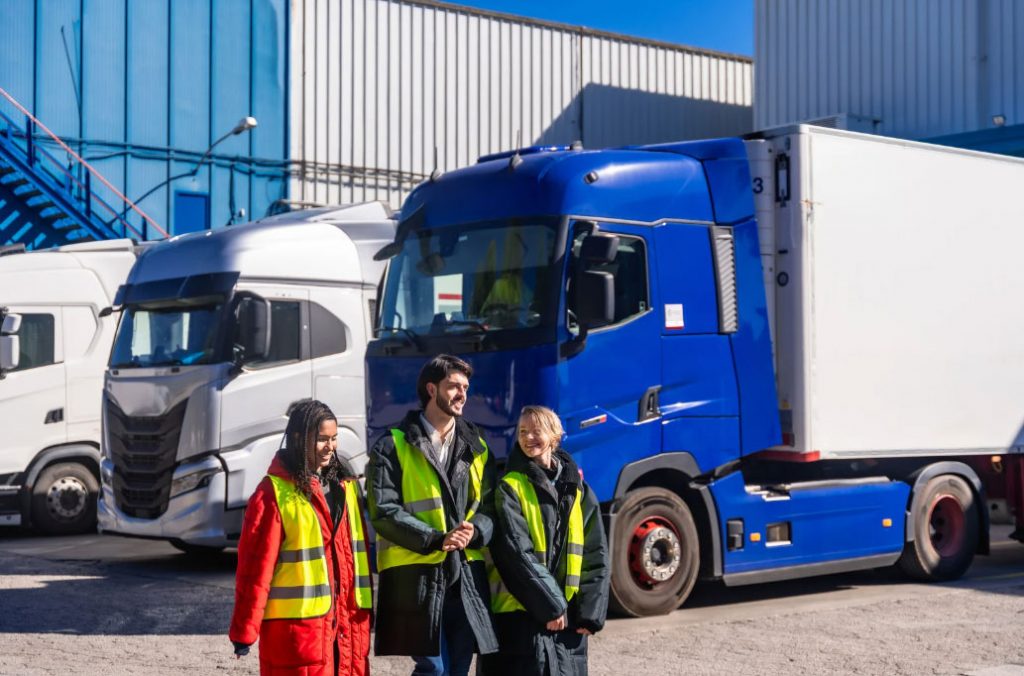
- Reduce safety incidents. Employees who understand spoken and posted safety instructions, warning labels, and emergency procedures make fewer costly mistakes.
- Cut down on miscommunication and rework. Clear instructions the first time mean fewer errors on the line, in the field, or on the road.
- Improve retention and promotability. Employees who can communicate confidently are more likely to stay and more qualified to move into lead or supervisory roles.
- Support compliance. OSHA's Training Standards Policy Statement requires that safety training be presented in a language and vocabulary employees can understand — it applies across agriculture, construction, general industry, and maritime. Employees who build stronger English skills are better able to understand safety instructions, signage, and supervisor communication that are conducted in English day to day.
- Strengthen team communication between English-speaking supervisors and LEP employees, and among crews who speak multiple first languages.
ENGLISH LANGUAGE TRAINING BY INDUSTRY
We tailor every course to the terminology, equipment, and scenarios your employees encounter every day.
Manufacturing Training covers machine operation instructions, lockout/tagout and safety signage, quality-control terminology, and communication with line supervisors — helping reduce errors and downtime caused by misunderstood instructions.
Landscaping & Grounds Services Courses focus on equipment safety terms, client-site communication, weather and hazard warnings, and clear crew-to-crew and crew-to-supervisor instructions for teams working across multiple job sites.
Transportation & Logistics Training builds vocabulary for warehouse operations, forklift and dock safety, shipping and receiving paperwork, GPS and dispatch communication, and DOT-related safety terminology.
Food Production & Processing Courses address food-safety and sanitation vocabulary, HACCP-related terminology, equipment safety, and clear communication in fast-paced, high-turnover production environments.
Also serving: construction, hospitality, healthcare support, and other industries with a large LEP workforce. Explore all sectors we support on our Industries Served page, or view Industry-Specific Courses for full curriculum detail.

HOW OUR CORPORATE ENGLISH TRAINING WORKS
- On-site, online, or hybrid — around your shifts. Classes can run in person at your facility, live online, or as a mix of both, and are scheduled to fit first, second, and third shifts, so training doesn't cut into production time.
- Small-group or one-on-one instruction. Groups are typically kept small so employees get real speaking practice, not passive lectures.
- Native-speaking, credentialed instructors experienced in workplace and industrial ESL — not general adult-education English classes.
- Role-play and real workplace scenarios, from safety briefings to reporting an incident to a supervisor.
- Progress tracking and reporting, so HR and safety managers can see measurable improvement over time.
- Nationwide delivery, tailored to each client's location, shift pattern, and industry vocabulary.
Request a free quote — a training manager will follow up to discuss your workforce, sites, and timeline.

CORPORATE ENGLISH TRAINING FOR PROFESSIONALS RELOCATING TO THE U.S.
Employees of international companies relocating to U.S. offices or plants also need workplace-ready English. We offer intensive, short- and long-term immersion programs for foreign-born professionals preparing to work in the U.S., customized to their role and industry.
FREQUENTLY ASKED QUESTIONS
What is corporate English language training?
Corporate English language training is instruction delivered to a company's employees — on-site, online, or a hybrid of both, usually in small groups — that focuses on the English vocabulary and communication skills needed for a specific job or industry, rather than general conversational English.
Which industries benefit most from workplace English training?
Industries with a large limited-English-proficient workforce see the biggest impact, including manufacturing, warehousing and transportation, landscaping, food production and processing, construction, and hospitality.
Do you offer training online, on-site, or both?
All three. Training can be delivered fully on-site at your facility, fully online with a live instructor, or as a hybrid combination — whatever fits your locations, shift patterns, and how spread out your workforce is.
Can training be scheduled around our shifts?
Yes. Classes are scheduled around first, second, and third shifts, and can run on-site, live online, or hybrid, so training doesn't interrupt production.
How does English training improve workplace safety?
OSHA requires that employee safety training be presented in a language and vocabulary workers can understand. When day-to-day instructions, signage, and supervisor communication happen in English, employees with stronger English skills are better equipped to understand safety procedures and respond correctly in an emergency, which is why many manufacturing, transportation, and food-production employers treat English training as a safety investment, not just an HR benefit.
Do employees need a minimum English level to start?
No. We assess each group's starting level and build a curriculum for true beginners through advanced learners, often within the same company.
How long does corporate English training take?
Program length depends on group size, starting proficiency, and company goals; most programs run in multi-week or multi-month cycles with progress reports along the way. A training manager can recommend a timeline once they know your workforce.
Is training available nationwide?
Yes. On-site, online, and hybrid corporate English training is delivered to companies across the U.S.
How much does corporate English language training cost?
Cost depends on group size, program length, location, and delivery format (on-site, online, or hybrid).
Request a quote for your specific language training. One of our training managers will then contact you to discuss your language training needs.