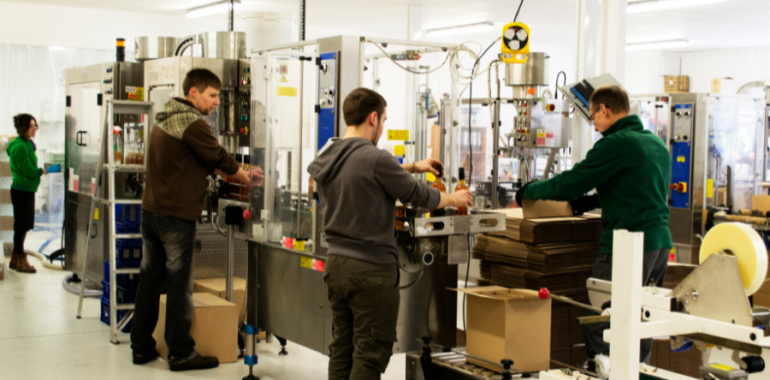
Walk the floor of a furniture plant in Hickory, a textile mill in Gaston County, or a poultry processing facility in Gainesville, and you'll see the same story playing out across the Southeast: production lines that need workers and a labor pool that increasingly speaks Spanish, Vietnamese, Haitian Creole, or another language other than English as a first language. For manufacturers in North Carolina (NC) and Georgia (GA), this isn't a future trend to plan for — it's the current reality of hiring.
The furniture, textile, and food-processing sectors that anchor much of the Southeast's manufacturing economy are leaning harder than ever on immigrant labor to keep production running. According to the North Carolina Department of Commerce, foreign-born workers made up roughly 18% of the state's manufacturing workforce as of 2024, with even higher concentrations in construction, agriculture, and food service. In Georgia, the poultry-processing corridor around Gainesville — the self-proclaimed "Poultry Capital of the World" — runs on a workforce that's estimated at 40–50% Hispanic and Latino, according to regional workforce data.
That's not a problem to be solved by hiring around. It's a workforce to be trained for, retained, and promoted from within — and English-language instruction is quickly becoming the differentiator that determines which manufacturers can actually staff their lines.
The Labor Shortage Behind the Headlines
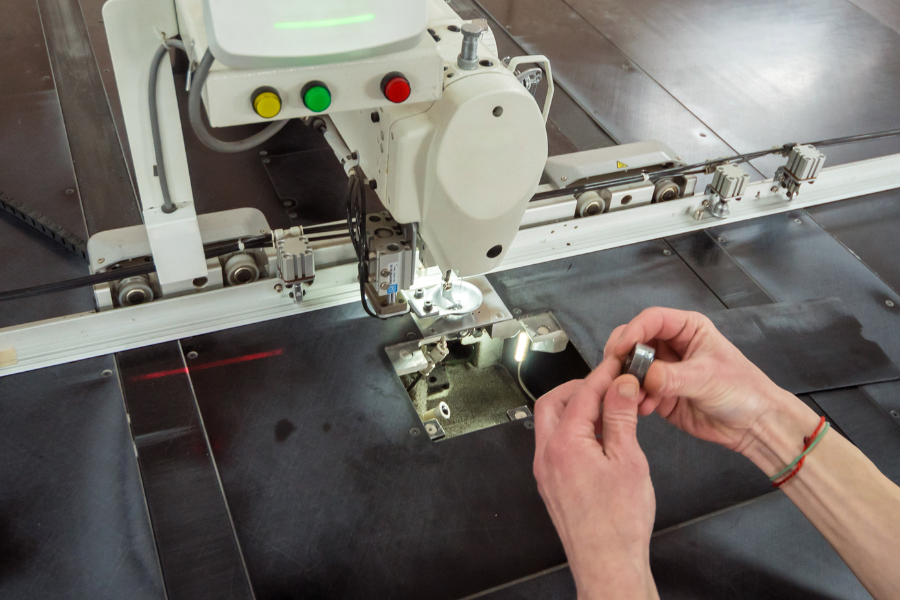
North Carolina and Georgia have spent the last decade attracting manufacturing investment — automotive suppliers, textile innovators, and food producers among them — faster than either state's workforce has grown to meet it. North Carolina's furniture industry, centered in the High Point and Catawba County region, and its textile mill sector, still the largest in the country by employment, both depend on a steady pipeline of production workers. Georgia's food-processing industry, led by its roughly $4 billion poultry sector, faces similar pressure, compounded by turnover rates that regional staffing data puts as high as 36% in some plants.
Manufacturers who've relied on word-of-mouth hiring within immigrant communities are discovering that recruiting is only half the battle. Retaining those workers — and moving them into higher-paying roles like line lead, quality inspector, or machine operator — depends on whether they can read a safety data sheet, follow a shift-change briefing, or ask a supervisor a clarifying question. Employers who invest in corporate language training are finding that the investment pays for itself in reduced turnover and fewer costly production errors.
Why English Training Has Become a Recruiting Differentiator
In a labor market this tight, wages alone don't win the best candidates — especially when nearby competitors are offering similar starting pay. What increasingly tips the decision is whether an employer offers a real path forward. On-site corporate English training tailored to a plant's specific equipment, terminology, and safety procedures signals to prospective hires that this employer intends to invest in them long-term, not just fill a shift.
This matters even more for compliance reasons. The Occupational Safety and Health Administration (OSHA) requires that safety training be delivered in a language and vocabulary that employees actually understand — not simply in English by default. As OSHA has stated in its training standards guidance, if a workforce customarily needs instruction in a language other than English, employers are expected to provide it that way. For manufacturers running heavy machinery, handling chemicals, or processing food at speed, that's not a nice-to-have; it's a legal and safety obligation. English training for employees closes that gap directly, giving workers the vocabulary to understand hazard communication, equipment instructions, and emergency procedures — while giving employers a defensible training record.
Manufacturers that have rolled out English classes for companies also report a secondary benefit: it becomes easier to promote from within. A production worker who can communicate confidently in English is a much stronger candidate for a supervisor or quality-control role, which reduces the cost and risk of external hiring for those positions.
A Hybrid Workforce Needs a Hybrid Training Model

Because manufacturing plants run multiple shifts and can't easily pull an entire production line off the floor for a classroom session, effective language training programs are built to work around the realities of a plant floor — short sessions, flexible timing, and content tied directly to the job rather than generic conversational English. For employers managing multiple facilities across North Carolina and Georgia, or coordinating training between day and night shifts, online ESOL training makes it possible to standardize instruction across every location without disrupting production schedules.
Positioning Onsite Training as a Recruiting Tool, Not Just a Retention Tool
Manufacturers gaining ground in this labor market aren't just offering English classes as an employee benefit after the fact—they're advertising them during recruitment. In a region where furniture, textile, and food-processing employers are all drawing from the same pool of bilingual and multilingual workers, being able to tell a candidate "we'll teach you the English you need to grow here" is a meaningfully different pitch than "we pay $2 more per hour than the plant down the road."
This is especially relevant as government data shows immigrant labor force participation consistently outpacing native-born participation in both states, meaning the workers manufacturers need most are already in the local labor market — they just need employers willing to invest in the language skills that turn a production job into a career.
For North Carolina and Georgia manufacturers trying to solve chronic staffing gaps in furniture, textile, and food-processing operations, onsite English training isn't a soft HR perk. It's becoming core workforce infrastructure — the difference between a plant that can only ever hire entry-level and one that can build a pipeline of workers ready to move up.
Contact Language Training Pro for a tailored proposal that aligns with your production goals and quality requirements. Request a free quote online - no obligation, customized to your plant.
Do manufacturers legally have to provide safety training in a language workers understand?
Yes. The Occupational Safety and Health Administration (OSHA) requires that safety training be delivered in a language and vocabulary employees can understand — not simply in English by default. If a plant's workforce customarily needs instruction in another language, employers are expected to provide it that way to meet their training obligations.
What industries in North Carolina and Georgia rely most on immigrant labor?
In North Carolina, foreign-born workers make up a significant share of the furniture, textile, construction, and agriculture sectors. In Georgia, the food-processing industry — particularly poultry processing in the Gainesville corridor — depends heavily on Hispanic and Latino workers, who make up an estimated 40–50% of the production workforce in that region.
How is onsite ESOL training different from a general English class?
Onsite corporate ESOL training is built around a specific plant's equipment, terminology, safety procedures, and shift schedule, rather than teaching generic conversational English. This makes it faster for workers to apply what they learn directly on the production line, and easier for employers to tie training outcomes to safety compliance and productivity.
Can English training reduce turnover in manufacturing plants?
Employers who invest in workplace English training generally see improved retention because workers gain the confidence and vocabulary to communicate with supervisors, understand instructions the first time, and see a realistic path toward promotion. In industries like poultry processing, where turnover can run as high as 36%, that kind of investment can meaningfully offset the cost of constant rehiring.
Is online ESOL training effective for multi-shift or multi-location manufacturers?
Yes. Online ESOL training allows employers to standardize instruction across day and night shifts or across multiple facilities without pulling workers off the production line for in-person classes. It's particularly useful for manufacturers in North Carolina and Georgia who operate several plants and want consistent training outcomes across locations.
Does offering English training help with recruiting, not just retention?
Increasingly, yes. In a tight labor market where competing manufacturers offer similar wages, being able to tell candidates that the company will invest in their English skills — and their career growth — is a differentiator during hiring, not just a benefit that shows up after someone's already on payroll.


