
Why Plant Controllers Should Care: The Cost of Language Barriers in Manufacturing
The cost of language barriers in manufacturing rarely appears under its own budget code. Instead, it hides within cost of goods sold, safety incident reports, training hours, and employee retention metrics. Investing in language training is a key way manufacturers can reduce manufacturing costs.
U.S. manufacturing output exceeded $3.0 trillion in early 2026. Even a 1–2% drag from poor communication represents $30–$60 billion in lost value sector-wide. In many plants, 20–30% of the workforce has limited English proficiency, with foreign-born manufacturing workers making up 33.4% in California, 23.2% in Texas, and 27.9% in New York. Industry data shows that language barriers contribute to 25% of workplace incidents, and workplace injuries cost the U.S. economy $167 billion annually. Meanwhile, 86% of workplaces report productivity losses due to language barriers.
Language Training Pro delivers job-specific English training for manufacturing plants nationwide. This article breaks down concrete cost buckets and shows how targeted language training can help reduce manufacturing costs.
The Cost of Language Barriers in Manufacturing in Scrap, Rework, and Mislabeled Shipments
The most visible hidden costs of language gaps show up on the production floor: incorrect settings, incorrect parts, incorrect labels. Consider this scenario: a Limited English Profiency (LEP) operator misreads a decimal point on a work order, runs a full batch of off-spec resin or metal, and the entire lot gets scrapped. Miscommunication leads to 20% of total work time lost across many organizations with diverse workforces.
The cost of language Barriers in manufacturing can add up. Run the math on a single costly mistake: one miscommunication on a $40,000 batch, repeated once per month, totals $480,000 per year in preventable scrap and rework. Mislabeled shipments compound the problem - a misinterpreted shipping instruction sends a truckload to the wrong distribution center, triggering returns, re-picking, extra freight, and customer penalties that damage customer relationships and customer satisfaction.
These costly miscommunications also drive overproduction, incorrect changeovers, and off-spec product that must be reworked or discounted. These costs rarely appear under language services - they bloat Cost of Goods Sold (COGS), overtime, and warranty budgets instead. Targeted English training focused on plant work orders, labels, and Standard Operating Procedures (SOPs) can drastically reduce these errors, as detailed in "Why Manufacturing Plants Need English Language Training".
The Largest, Most Visible Price Tag: The Cost of Language Barriers in Manufacturing in Safety Incidents and Compliance
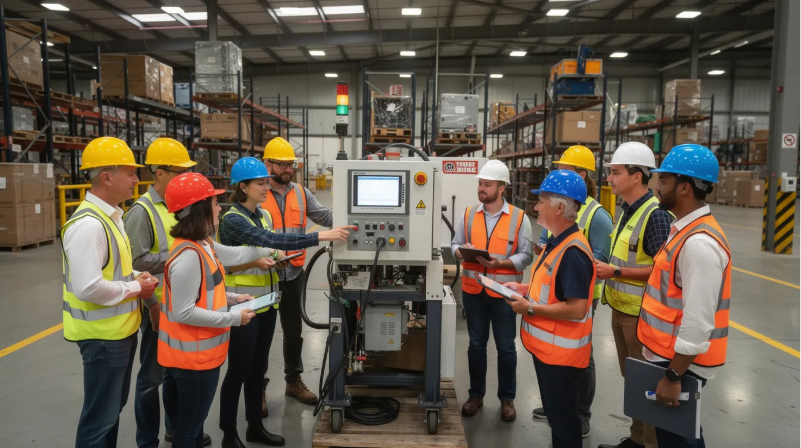
In industrial environments, communication barriers are not just an operational drag - they are a safety and compliance risk. Language barriers account for 25% of workplace incidents, according to OSHA, and injury-related costs to U.S. employers approach $167 billion annually, including medical expenses, lost time, and productivity losses.
Specific examples of where misunderstood safety protocols increase risks in industrial settings include:
- Misinterpreted lockout/tagout procedures during maintenance
- Confusion over chemical handling labels or safety requirements
- Failure to understand safety procedures during emergency evacuations
One serious language-related injury per quarter at a mid-sized plant - costing $100,000 in direct and indirect expenses - exceeds $400,000 annually. OSHA requires safety training in a language employees understand, and repeated misunderstandings in English-only safety training can lead to audit, citation, and legal exposure. Clear communication is essential for safe operations in manufacturing. Near-misses, incident investigations, and retraining caused by communication gaps add further hidden costs. Focused safety vocabulary practice and scenario-based English training function as a safety-control measure that helps reduce both workplace injuries and regulatory risk - not a perk.
Reduce Manufacturing Costs from Lost Productivity: Bottlenecks, Clarifications, and Project Delays
Beyond workplace accidents and scrap, communication issues silently drain productive hours every shift. Poor communication wastes 7.47 hours per worker per week across affected teams, and its cumulative effect on production lines is staggering.
Bilingual employees spend an average of 4 hours per week translating for coworkers. At $25–$30/hour plus benefits, bilingual employees lose $7,500 annually in productivity - labor that could improve productivity on the line instead. ESL workers lose $1,800 annually due to translation needs, smartphone apps, and repeated clarifications that slow the entire operation.
These micro-delays cascade into production delays and project delays. A 30-minute delay on a line producing $15,000/hour, occurring twice weekly due to workflow issues, amounts to nearly $780,000 per year in lost output capacity.
Recurrent retraining - repeated toolbox talks, SOP walkthroughs, and "do-overs" - pulls supervisors off the floor and inflates training budgets. To reduce language barriers without shutting down lines, In-Person ESL Training and live Online ESL Training from Language Training Pro can be scheduled around shifts so multilingual teams build skills while production keeps moving.
Turnover, Grievances, and Morale: The Human Side of Hidden Cost
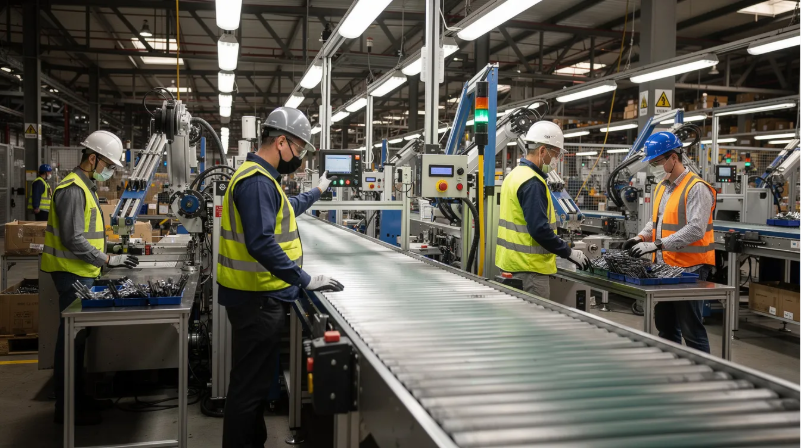
Poor communication doesn't just hurt output - it erodes psychological safety, engagement, and employee retention. LEP employees who cannot understand safety instructions, performance expectations, or supervisor feedback often feel unsafe or undervalued, leading to grievances and higher employee turnover. Poor communication can lead to employee dissatisfaction and turnover, and 42% of workers believe language barriers increase turnover rates.
Turnover costs range from 50–75% of an employee's salary when factoring in recruiting, onboarding, and ramp-up. Language barriers contribute to 50-75% turnover costs per employee in affected roles. At a 300-person plant with 30% LEP workforce, if communication gaps drive an additional 10% turnover among those workers (roughly 9 people at $40,000/year), replacement costs alone reach $180,000–$270,000 annually.
The cost of language barriers in manufacturing may be subtle. They can create an informal "glass ceiling" in which talented and experienced employees, who may have limited English proficiency, are overlooked for lead or technician roles, resulting in lost revenue as institutional knowledge walks out the door. Companies investing in language training see a 25% lower turnover rate. Structured corporate ESL programs and workplace communication skills training signal investment in multilingual workforce development, contributing to a company's success by fostering a more stable, experienced team that helps reduce manufacturing costs over time.
Reduce Manufacturing Costs: From Soft Benefit to Hard ROI
Many organizations still treat language services and ESL classes as soft HR benefits. The financial reality is different: they function as cost-avoidance tools, similar to preventive maintenance on critical equipment.
Even conservative attribution across these buckets often yields a six-figure annual sum for a mid-sized plant. Many workforce training programs deliver returns of approximately $1.48 for each $1 invested - a reasonable expectation for well-designed language training that helps teams communicate effectively and collaborate effectively. This is continuous improvement and risk management, not a standalone HR initiative. For manufacturers who rely on distributed teams across facilities, the impact multiplies.
How Language Training Pro Helps Bridge Communication Gaps and Reduce Manufacturing Costs
Language Training Pro specializes in helping manufacturers bridge communication gaps through focused English training tailored to industrial settings.
Core offerings for manufacturing professionals include:
- On-site ESL classes with shift-friendly schedules (1–3 sessions per week over 8–16 weeks)
- Live Zoom-based cohorts for multi-site and distributed teams
- Curriculum built from real plant materials: work orders, quality checklists, lockout/tagout procedures, and near-miss reports
Manufacturing clients typically track reductions in scrap attributed to operator error, fewer safety incidents in which misunderstanding is a factor, faster onboarding for new LEP hires, and lower reliance on ad hoc interpreters. Programs include pre- and post-assessments, supervisor feedback loops, and ROI dashboards, enabling controllers to verify the true cost impact. The same message is clear: effective communication across your multilingual workforce is not a soft benefit - it is worksite efficiency, reduced safety risks, and margin protection. Relieving misunderstandings on the floor is how you protect your earnings and can significantly help reduce the cost of language barriers in manufacturing.
Get a free quote for a plant-specific cost-of-language-barriers estimate and see how targeted training can help reduce manufacturing costs--with measurable results where it matters most.
Frequently Asked Questions
What are the hidden costs of language barriers in manufacturing?
Language barriers drive up costs through scrap and rework, mislabeled shipments, safety incidents, lost productivity, and employee turnover. These costs rarely appear under their own budget line. Instead, they're buried in cost of goods sold, overtime, warranty, training, and retention budgets.
How do language barriers affect safety in manufacturing plants?
When workers can't fully understand safety instructions, it increases the risk of misinterpreted lockout/tagout procedures, confusion over chemical labels, and mistakes during emergency evacuations. OSHA requires safety training to be delivered in a language employees understand, so communication gaps can also create compliance and legal risk.
How much productivity do manufacturers lose to language barriers?
It adds up quickly. Bilingual employees spend an average of 4 hours per week translating for coworkers, which can cost around $7,500 per employee each year in lost productivity. Repeated clarifications, retraining, and small delays on the line can add up to significant lost output.
Do language barriers increase employee turnover?
They can. Employees who can't understand safety instructions, expectations, or feedback may feel unsafe or undervalued, and 42% of workers believe language barriers increase turnover. Replacing an employee can cost 50–75% of their salary once recruiting, onboarding, and ramp-up are factored in.
How can manufacturers reduce the cost of language barriers?
Job-specific English training is one of the most effective ways. Programs built around real plant materials, like work orders, quality checklists, and lockout/tagout procedures, help employees communicate clearly. Training can be held on-site or online and scheduled around shifts so production keeps moving.
How do you measure the ROI of English language training in manufacturing?
Manufacturers typically track reductions in operator-error scrap, safety incidents involving misunderstandings, onboarding time for new hires, and reliance on ad hoc interpreters. Pre- and post-training assessments and supervisor feedback help show the impact, and workforce training programs often return about $1.48 for every $1 invested.