Beginner English Training for Employees: Online and On-Site
Help entry-level LEP employees understand instructions, work safely, and communicate with supervisors and coworkers from their first weeks on the job.
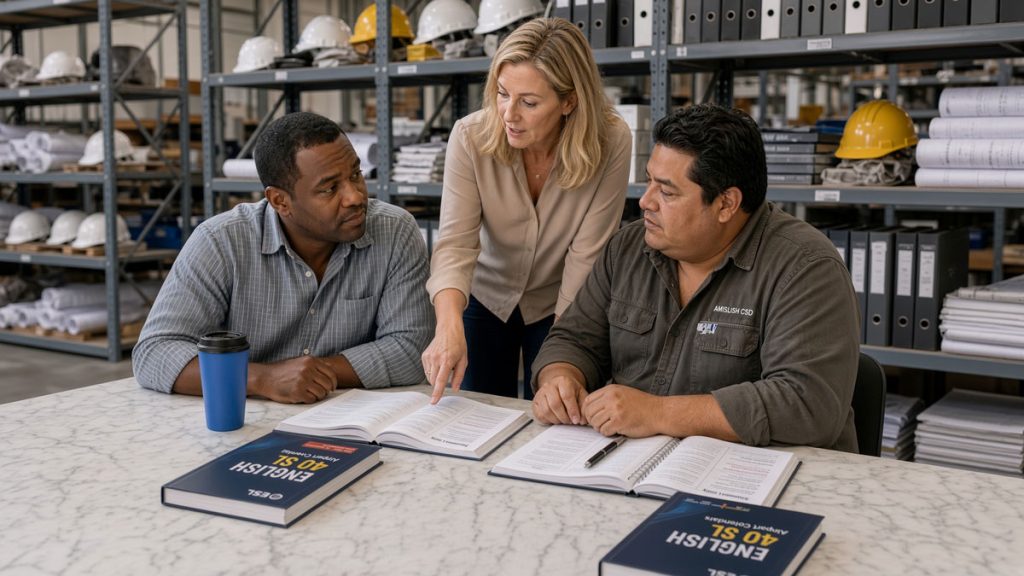
Language Training Pro’s Beginner English Program is corporate English language training built for companies that employ large numbers of Limited English Proficient (LEP) workers. Live instructors teach every class, either at your facility or online. Employees learn the English they need on the job: following directions, asking for help, reporting problems, and understanding safety rules.
We work with manufacturers, construction firms, warehouses, food processors, hotels, healthcare and senior care providers, landscaping companies, and other employers whose frontline teams are still building basic English. Our programs fit around your shifts, sites, and production schedules.

Who the Beginner Program Is For
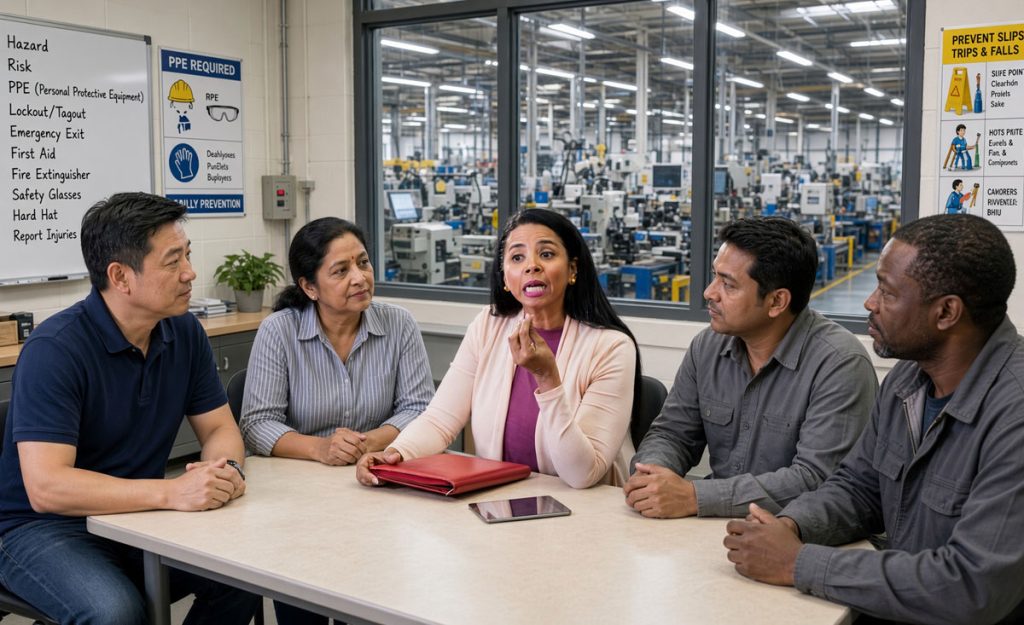
The program fits employees who:
- Know little or no English, or only basic words and phrases
- Struggle to understand verbal instructions, safety briefings, or written signs
- Rely on coworkers or interpreters to talk with supervisors
- Can’t yet fill out simple forms, timesheets, or incident reports on their own
Before training starts, Language Training Pro sends your company a pre-test link for your employees. Their results place each employee at the right level, so classes move at the right pace.
How We Measure English Levels: The CEFR Framework
Language Training Pro uses the Common European Framework of Reference for Languages (CEFR), the international standard for measuring language ability. CEFR has six levels, from A1 (beginner) to C2 (proficient):
| LTP Program Level | CEFR Level | What Employees Can Do |
|---|---|---|
| Beginning | A1–A2 | Understand and use everyday workplace phrases, introduce themselves, follow simple instructions, ask basic questions |
| Intermediate | B1–B2 | Handle most routine work conversations, explain problems, take part in team meetings |
| Advanced | C1–C2 | Communicate fluently and accurately in complex, professional, and leadership situations |
This program covers A1 and A2. B1 is the start of the Intermediate stage, and C1 is the start of the Advanced stage. Because we measure progress against CEFR, HR and training managers get a clear, objective picture of where each employee stands and how far they’ve come.
What Employees Learn at the Beginner Level
In our beginner workforce English training, employees learn to:
- Introduce themselves and talk with supervisors, coworkers, and customers
- Understand and follow simple verbal and written instructions
- Use numbers, dates, times, and shift schedules correctly
- Name common tools, equipment, materials, and workplace locations
- Ask for help, ask for clarification, and ask for permission (can, may)
- Report problems, mistakes, and injuries in simple English
- Describe daily tasks and routines (Present Simple, adverbs of frequency)
- Describe what is happening right now (Present Progressive)
- Talk about completed tasks (Past Simple)
- Describe locations using prepositions (next to, behind, on the left)
- Make suggestions with let’s
- Read short texts, signs, and notices, and write basic sentences
Two Program Options: General English vs. Customized Industry-Specific English
Every company’s workforce is different. We offer two types of beginner corporate English training:
1. General English for Everyday Workplace Communication
The General English Program builds the core English employees need in any job: greetings, numbers, time, directions, simple questions, and everyday workplace conversations. It works well when:
- Your employees work in different roles or departments
- You want a strong language foundation before industry-specific training
- You need a program you can launch quickly across several teams
2. Customized Industry-Specific English
Our Customized English Language Training Programs are workplace English training built around your industry, your job roles, and your own materials. Instructors teach beginner-level English with the vocabulary, safety language, procedures, and situations your employees deal with every day. Examples:

- Manufacturing: machine parts, quality checks, line instructions, lockout/tagout terms
- Construction: tools, PPE, jobsite hazards, OSHA safety language
- Warehousing: picking, packing, inventory, forklift safety
- Food Processing: sanitation, food safety, cutting-floor procedures
- Hospitality: guest requests, housekeeping, kitchen communication
- Senior Care: daily care routines, reporting changes, talking with residents and families
- Landscaping: equipment, plant care, customer property instructions
The key difference: General English teaches how to communicate at work in general. Customized English teaches how to communicate in your workplace. Many companies start with General English and move to a customized program as employees progress. See all industries we serve.
Online or In-Person: Training That Fits Your Workforce
We offer English training for employees in the format that fits your operations:
- In-person training at your facility: Instructors come to your site, plant, or office. This works best for hands-on, industry-specific content and for employees who learn best face to face.
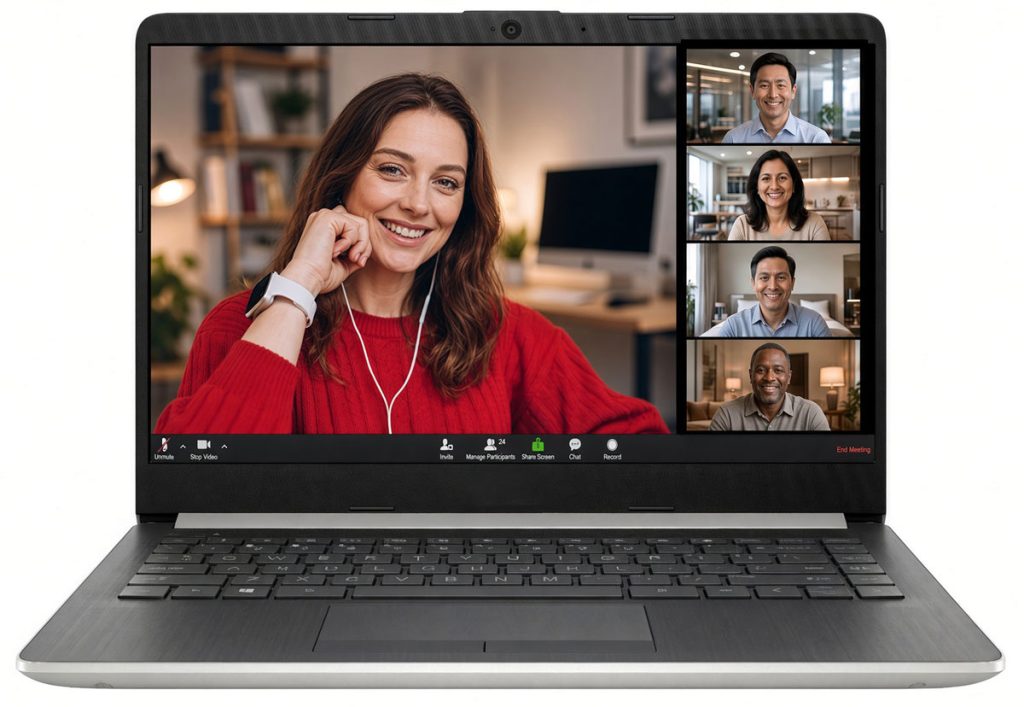
- Online English training for employees: Live, interactive virtual classes with real instructors. This works well for multi-site companies, remote teams, and flexible scheduling.
Every class is live and instructor-led. We don’t use self-paced software. Classes can run before or after shifts, during work hours, or on a rotating schedule for different shift teams. View our training locations.
Why Companies Invest in Beginner English Training
Employees who can communicate in English work more safely and more productively, and they’re more likely to stay. Companies that invest in corporate English language training for their LEP workforce typically see:
- Fewer safety incidents and miscommunications
- Faster onboarding and cross-training
- Less reliance on bilingual coworkers to translate
- Higher employee retention and engagement
- A stronger pipeline of employees ready for promotion
Learn more about why companies invest in language training.
Books and Materials
All course books and materials are included. For customized programs, instructors also build lessons from your company’s own documents, such as safety manuals, SOPs, signage, and forms.
Get a Customized Training Quote
Tell us about your workforce: the number of employees, your industry, your locations, and your scheduling needs. We’ll recommend the right program and level.
Frequently Asked Questions
What is beginner English training for employees?
It is live, instructor-led English instruction for LEP employees at the CEFR A1–A2 level. It teaches the basic English workers need to follow instructions, communicate with supervisors, and work safely.
What CEFR level is the beginner program?
The beginner program covers CEFR levels A1 and A2. Language Training Pro uses the CEFR scale from A1 (beginner) to C2 (proficient). B1 marks the Intermediate stage and C1 marks the Advanced stage.
What is the difference between General English and Customized Industry-Specific English?
General English teaches everyday workplace communication that works in any job. Customized Industry-Specific English is built around your industry, job roles, and company materials. It teaches the exact vocabulary, safety language, and procedures your employees use every day.
Do you offer online and in-person English training?
Yes. Language Training Pro offers live English training both in person at your facility and online with live instructors. Both formats can be scheduled around your shifts.
How are employees placed in the right level?
Before training starts, Language Training Pro sends your company a pre-test link for your employees. The results place each employee in the right CEFR-based level.
Do you offer self-paced English training?
No. All Language Training Pro programs are live and led by an instructor, either online or in person.
What industries do you serve?
We serve manufacturing, construction, warehousing, food processing, hospitality, healthcare, senior care, landscaping, transportation, agriculture, and more.