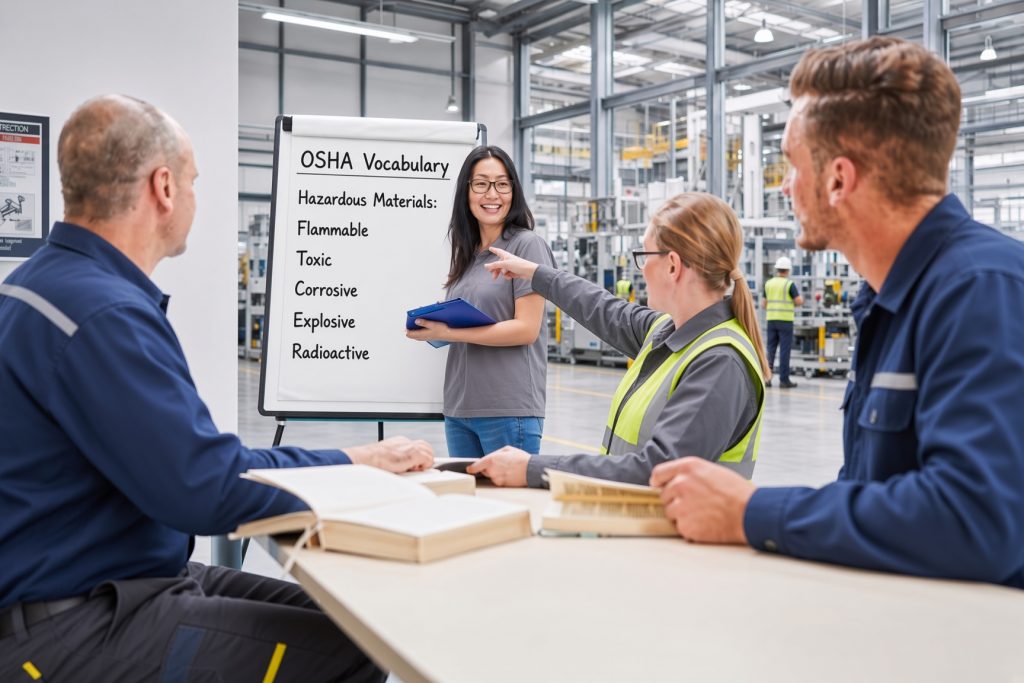
Corporate ESL classes for factory workers, delivered onsite at your plant or online — built for manufacturers with large multilingual workforces.
Manufacturing runs on precision, safety, and teamwork — and all three break down when workers and supervisors don't share a common language. Language Training Pro provides English training for manufacturing workers designed specifically for plant floors: safety terminology, equipment instructions, quality standards, and the everyday communication that keeps a shift running smoothly.
We work directly with HR and operations leaders at manufacturing companies nationwide to reduce language barriers in manufacturing, improve OSHA compliance, and turn language training into a measurable operations investment — not just a benefit line item. See how we serve manufacturing and other industries with large multilingual workforces.

Why Manufacturers Choose Our ESL Classes for Factory Workers
Manufacturing employs one of the most linguistically diverse workforces in the US economy. When floor workers, machine operators, and supervisors don't speak the same language fluently, it shows up in scrap rates, near-misses, missed production targets, and turnover. Our English classes for manufacturing plant employees are built to close that gap fast:
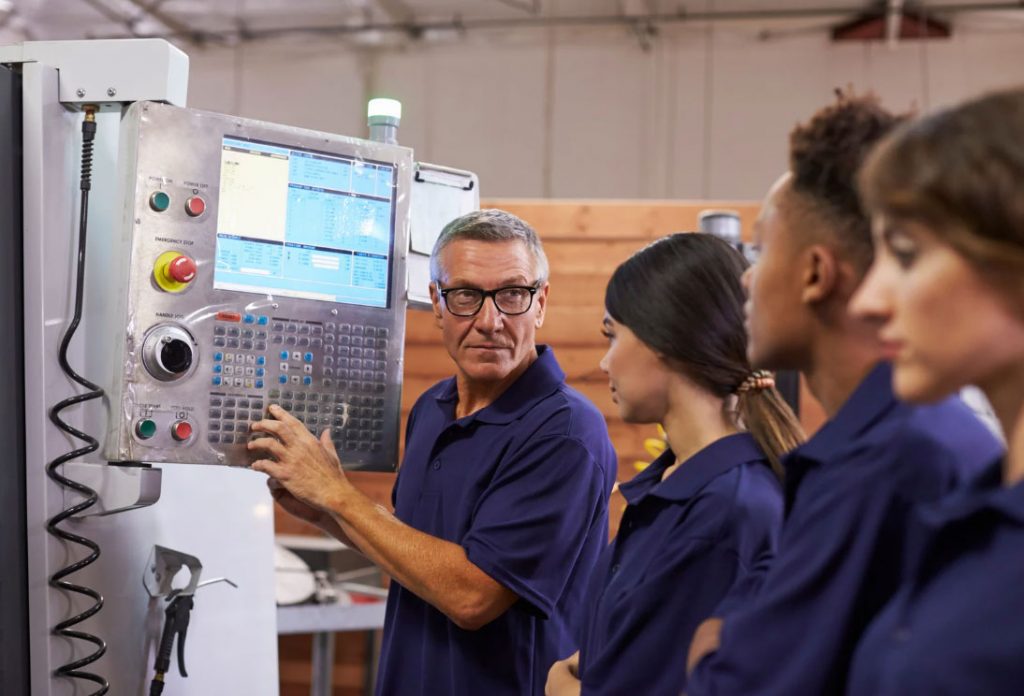
- Safety-first curriculum — vocabulary and scenarios drawn from real plant safety protocols, lockout/tagout procedures, PPE requirements, and hazard communication
- Role-based instruction — separate tracks for floor workers, team leads, and supervisors so training matches what each employee actually needs on shift
- Flexible delivery — onsite classes at your facility, live online classes, or a blended schedule that works around shift patterns
- Measurable outcomes — pre- and post-assessments so HR and operations can report on progress, not just attendance
OSHA English Training for Manufacturing: Why It Matters
OSHA requires that safety training be delivered in a language and vocabulary employees understand. For plants with limited-English-proficient (LEP) workers, that requirement is only met when language training happens alongside — or as part of — a broader safety program. Our OSHA English training for manufacturing helps employees:
- Read and understand safety signage, SDS sheets, and hazard labels
- Follow verbal safety instructions and emergency procedures without a translator
- Ask questions and report hazards or near-misses in English, so nothing gets lost or delayed
- Participate confidently in safety meetings, toolbox talks, and incident debriefs
Reducing the language gap on the floor is one of the most direct ways a manufacturer can lower incident rates and demonstrate OSHA compliance efforts to auditors and insurers.

What Language Training for Manufacturing Companies Looks Like With Us
We know large manufacturers can't pull an entire shift off the floor for training. That's why our programs for language training for manufacturing companies are built around your production schedule, not the other way around:
- Onsite classes at your facility, scheduled around shift changes and break times
- Live online classes with real instructors for multi-site companies or remote/distributed teams
- Group and individual formats depending on team size and skill-level spread
- Customized vocabulary — pulled from your SOPs, equipment manuals, and safety documentation
- Dedicated account management for HR and L&D teams managing training across multiple facilities
As a language training company for manufacturers, we've delivered corporate English programs nationwide since 1993, and we build every curriculum around the actual language your team uses on the floor — not a generic ESL textbook.
The Business Case: Reducing Language Barriers in Manufacturing
For HR and operations leaders evaluating training budgets, English training for plant employees consistently shows returns in a few key areas — see our full breakdown of why companies invest in language training:

- Fewer safety incidents from clearer instruction comprehension
- Lower turnover as workers gain confidence and see a path to advancement
- Reduced supervisor bottlenecks from constant translation needs
- Improved quality and fewer errors tied to misread instructions or specs
- Stronger promotion pipelines — English proficiency is often the only barrier keeping capable floor workers from supervisory roles
Get Started
Whether you're training a single shift or rolling out English classes for manufacturing plant employees across multiple facilities, we'll build a program around your production schedule, workforce, and goals. Explore our full range of industry specific courses or learn more about our English language training approach.
Frequently Asked Questions
Does English training help with OSHA compliance in manufacturing?
Yes. OSHA requires safety training in a language workers understand. Our OSHA English training for manufacturing helps LEP employees understand safety instructions directly, supporting compliance and reducing incident risk.
Can training be delivered onsite at our plant?
Yes. Onsite classes are scheduled around your shift patterns and held directly at your facility. We also offer live online classes for multi-site companies or distributed teams.
How is this different from a generic ESL course?
Our English training for manufacturing workers uses vocabulary and scenarios pulled from real plant environments — safety protocols, equipment instructions, and quality standards — instead of general textbook English.
Do you offer training for supervisors as well as floor workers?
Yes. We offer role-based tracks so team leads and supervisors get communication and leadership-focused instruction, while floor workers focus on safety and task-specific vocabulary.
How quickly can training start after we request a quote?
Timelines depend on class size, number of shifts, and locations. Submit the quote form and our Language Training Department will provide a program timeline for your facility.