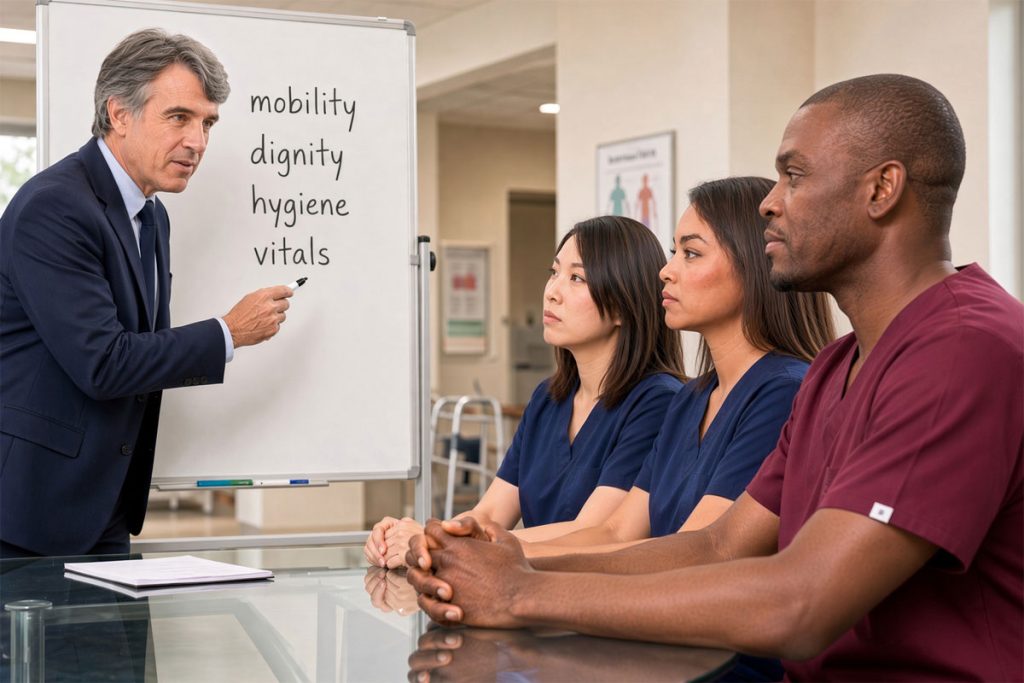
English & Communication Training for Senior Care and Home Care Staff
Luxury senior living communities and premium in-home care agencies compete on one thing above all else: trust. Families choosing an upscale assisted living residence, a memory care community, or a private concierge caregiver for a parent's home are paying for reassurance as much as service. That reassurance breaks down fast when a caregiver — however skilled clinically — struggles to explain a care plan, reassure an anxious family member, or handle a sensitive conversation in English.
Language Training Pro builds customized English and cross-cultural communication programs for the immigrant caregivers, CNAs, HHAs, and private-duty staff who make up much of today's home care workforce. We help high-end senior care organizations turn strong clinical teams into confident communicators — protecting the polished, white-glove experience your brand promises.

Why Communication Is a Bigger Risk in Premium Senior Care
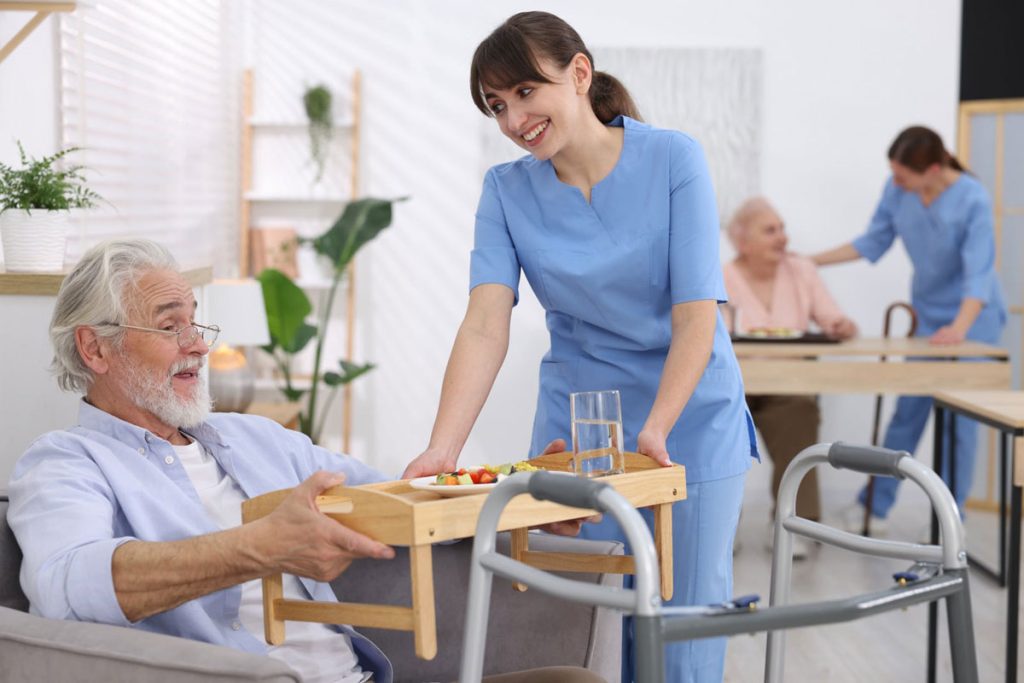
In a luxury residential facility or a private-pay concierge care arrangement, families are present, engaged, and paying close attention. A miscommunicated symptom, a misunderstood instruction, or an awkward phone call with an adult child overseeing care from out of state can damage trust that took months to build. In high-end settings, this shows up as:
- Families requesting caregiver changes over communication frustration, not care quality
- Online reviews citing "language barriers" even when clinical care was excellent
- Staff turnover among skilled but under-confident English speakers
- Liability exposure from unclear documentation or incident reporting
Strengthening English proficiency isn't just an HR nicety in this segment — it directly protects occupancy, referrals, and reputation.
What English Training Covers for Senior Care Staff
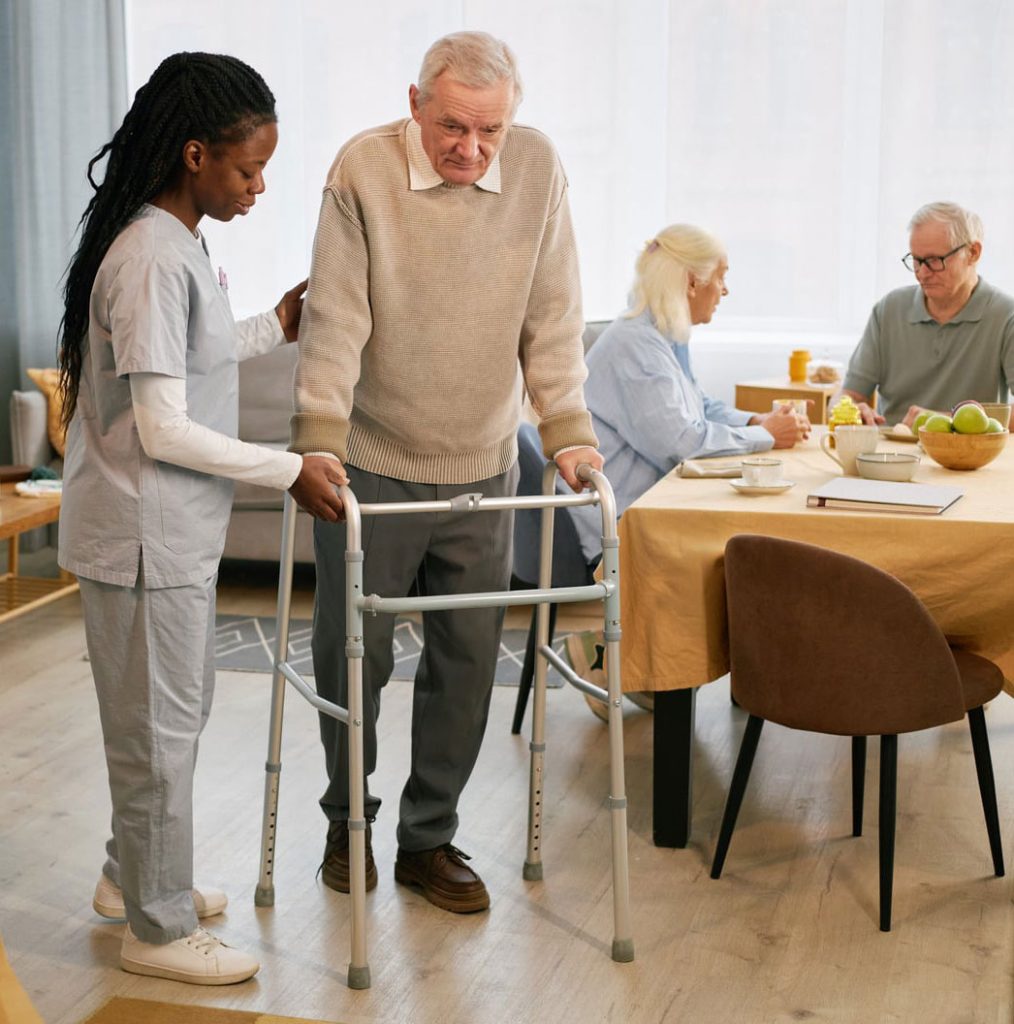
Programs are built around the real conversations caregivers have every day, not generic ESL lessons:
- Care plan and medical communication — explaining conditions, medications, and daily routines clearly to residents and families
- Family and resident-facing etiquette — phone manner, greeting families, handling questions with warmth and professionalism
- Documentation and reporting — writing clear incident reports, shift notes, and care logs
- Cultural sensitivity and discretion — especially important for in-home concierge caregivers working inside a private residence
- De-escalation and emergency language — staying clear and calm when something goes wrong
We also offer Medical Spanish training for English-speaking staff who want to communicate better with Spanish-speaking residents and families — useful for agencies serving diverse senior populations in both directions.
Who We Train
- Certified Nursing Assistants (CNAs) and Home Health Aides (HHAs)
- Private-duty and live-in caregivers for in-home concierge care
- Memory care and assisted living direct care staff
- Facility concierge, front desk, and family liaison staff
- Nursing and clinical staff at skilled nursing and rehab communities
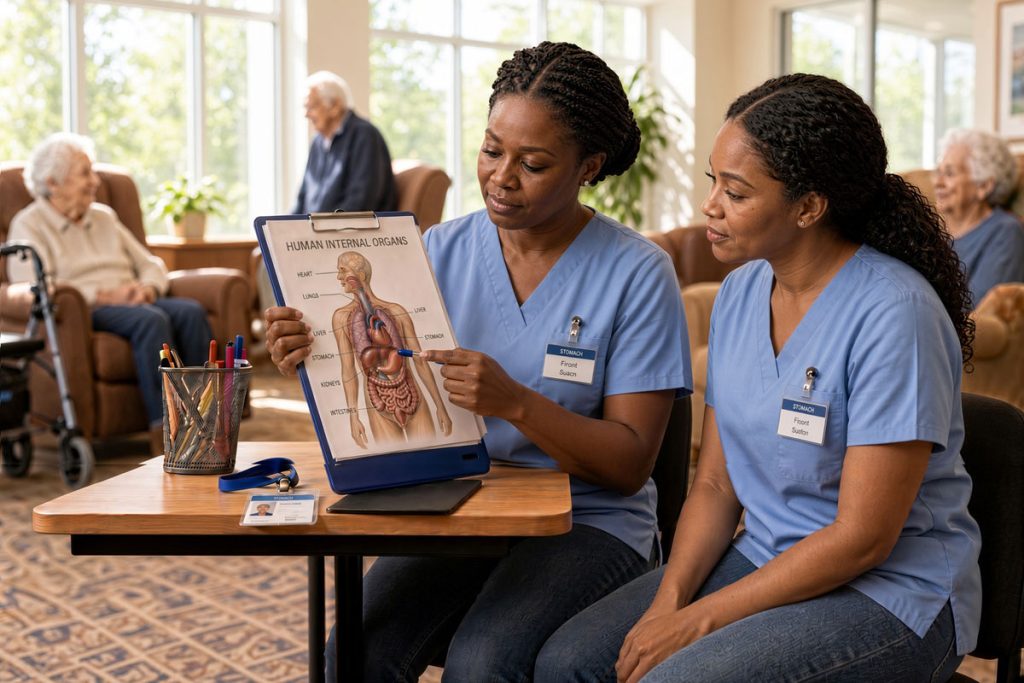
Why Senior Care Organizations Choose Language Training Pro
Training is customized to your organization — not a generic course. We deliver it on-site at your community, online for staff on rotating schedules, or a mix of both, and we can build separate tracks for facility teams versus private in-home caregivers whose needs differ. See our why invest in language training page for the retention and quality data behind that ROI, and browse testimonials from other clients we've trained.
Frequently Asked Questions
Why does English training matter for luxury senior living and concierge home care staff?
In premium senior care settings, families expect flawless communication alongside clinical skill. Caregivers with strong English proficiency build trust faster, reduce misunderstandings around care plans and medications, and reflect the polished standard luxury communities and concierge agencies promise.
Can training be customized for private-duty and in-home concierge caregivers, not just facility staff?
Yes — programs are built separately for facility-based teams and for private in-home caregivers, focusing on the etiquette, discretion, and family-facing communication that in-home concierge care requires.
What topics are covered?
Healthcare and eldercare vocabulary, discussing care plans and symptoms with families, phone and in-person etiquette, documentation, cultural sensitivity, and emergency communication.
Is training available on-site at senior living communities?
Yes — on-site at your community or online for private caregivers and staff on flexible schedules.
Which languages do senior care staff typically need support in?
Most caregivers are native speakers of Spanish, Mandarin or Cantonese Chinese, Haitian Creole, French, Tagalog, Vietnamese, Korean, or Russian, and are strengthening workplace English rather than learning it from scratch.