
The Merrimack Valley helped invent American manufacturing. The mills of Lowell, Lawrence and Haverhill drew workers from around the world in the 1800s, and that story never really stopped. Today, the region's precision machining shops, medical device makers, food producers, plastics molders and electronics assemblers still depend on an immigrant workforce, now largely from the Dominican Republic, Puerto Rico, Central America, Cambodia, Vietnam and beyond.
Manufacturing remains a pillar of the regional economy. In Greater Lowell it accounts for 14.3% of jobs, second only to healthcare, and only the Merrimack Valley and North Shore workforce regions have a larger manufacturing share anywhere in Massachusetts (MassHire Greater Lowell local plan).
The demographics are striking. Lawrence has the largest share of Latino residents of any city in Massachusetts, at roughly 81% (Gastón Institute, Latinos in Massachusetts). Lowell is home to one of the largest Cambodian American communities in the country; more than one in four residents were born abroad, and Khmer is spoken in nearly 12% of the city's households, compared with less than half a percent statewide (UMass Donahue Institute).
For manufacturers, this workforce is a competitive advantage: skilled, hardworking and loyal. But when employees can't fully understand a work instruction, a safety data sheet or a quality procedure, the gaps show up in scrap rates, near-misses, slow onboarding and missed promotions.
The good news is that Massachusetts employers don't have to fund the solution alone. State grants and the region's two MassHire workforce boards can cover much of the cost of English language training for Lowell, Lawrence and Haverhill manufacturing employees. Here's how it works and how to get started.
Why English skills matter on the manufacturing floor
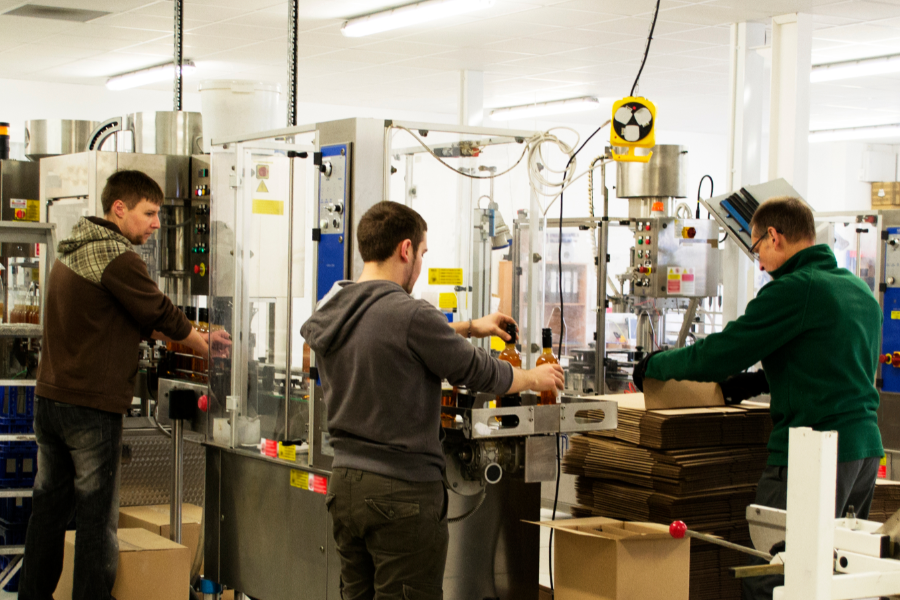
Modern manufacturing runs on written and spoken communication. Even hands-on production roles now involve reading work instructions, logging data, following quality checklists and talking through problems with engineers and supervisors. When language is a barrier, it affects the whole operation.
Safety. Lockout/tagout steps, machine guarding rules, chemical labels and safety data sheets only protect workers who understand them. OSHA expects required training to be delivered in a language and vocabulary employees can actually understand (OSHA Training Standards Policy Statement).
Quality and compliance. Merrimack Valley manufacturers serve demanding customers in aerospace, defense, medical devices and electronics. ISO 9001, AS9100, ISO 13485 and FDA quality systems all depend on employees following documented procedures exactly and recording what they did. Misread instructions lead to scrap, rework, nonconformances and audit findings.
Productivity and onboarding. New hires who struggle with English take longer to train and lean heavily on bilingual coworkers, which slows down your best people too.
Advancement and retention. Many plants have experienced, skilled operators who could become team leads, inspectors or trainers but are held back by English. Language training builds an internal promotion pipeline and shows employees the company is investing in their future, which is one of the strongest retention tools available in a tight labor market.
Communication across shifts and teams. Clear handoffs, accurate problem reporting and participation in continuous-improvement meetings all depend on shared language. Workers who can speak up contribute ideas, not just labor.
Funding available for workplace English classes in Massachusetts
Massachusetts is one of the most generous states in the country when it comes to paying for incumbent-worker training, and English for Speakers of Other Languages (ESOL) is a stated priority.
The Workforce Training Fund Program (WTFP)
The Workforce Training Fund is paid for by Massachusetts employers through their unemployment insurance contributions, so most manufacturers in the Merrimack Valley are already paying into it. It is administered by Commonwealth Corporation and has two main tracks.
The General Program funds customized training plans for employers of any size. Commonwealth Corporation specifically encourages employers to apply for grants that include ESOL and Adult Basic Education (Commonwealth Corporation, General Program). As of April 1, 2026, the maximum General Program award increased from $125,000 to $200,000 (New England Society of CPAs summary of the policy update). Grants are competitive, employers are expected to contribute their own investment, and applications are reviewed on a rolling basis.
The Express Program is the fast track for smaller companies. Businesses with 100 or fewer Massachusetts employees can be reimbursed up to 100% for approved courses, up to $3,000 per person per course and $15,000 per calendar year (Commonwealth Corporation, Express Program). Courses must be listed in the Express directory, and applications must be submitted at least 21 days before training starts. Since April 2026, employers can use Express and General grants at the same time.
| General Program | Express Program | |
|---|---|---|
| Who can apply | Massachusetts employers of any size that pay into the Workforce Training Fund | Employers with 100 or fewer Massachusetts employees |
| Maximum award | Up to $200,000 | Up to $15,000 per calendar year; $3,000 per person per course |
| Training type | Customized plan designed with a provider of your choice | Pre-approved courses from the Express directory |
| Best for | Multi-cohort, plant-specific ESOL programs | Small shops training a few employees quickly |
| Timing | Competitive review; plan ahead | Apply at least 21 days before the course starts |
Both programs require a Certificate of Good Standing from the Massachusetts Department of Revenue and a Certificate of Compliance from the Department of Unemployment Assistance, so it's worth requesting those early.
Other resources
MassHire career centers and workforce boards can also point employers to federally funded WIOA incumbent-worker and on-the-job training options, adult education partners, and occasional regional grant opportunities. Program details and funding levels change, so confirm current terms directly with Commonwealth Corporation or your local MassHire board before applying.
Working with MassHire Greater Lowell and MassHire Merrimack Valley

Massachusetts runs its public workforce system through regional MassHire boards and the career centers they charter. For Merrimack Valley manufacturers, two regions matter:
- MassHire Greater Lowell covers Lowell, Billerica, Chelmsford, Dracut, Dunstable, Tewksbury, Tyngsborough and Westford.
- MassHire Merrimack Valley covers Lawrence, Haverhill, Methuen, Andover, North Andover, Amesbury, Newburyport and surrounding towns.
Both regions have business services teams whose job is to help employers recruit, train and retain workers. They are a natural first call for a manufacturer exploring funded English classes. The City of Lowell notes that its career center and workforce board provide technical assistance to employers on the Workforce Training Fund and other state training grants (City of Lowell, Workforce Development).
A business services representative can typically help you:
- Understand which funding programs fit your company size and goals
- Review your eligibility and paperwork before you apply
- Connect with other local employers running similar programs, including consortium grants that let smaller companies train together
- Identify adult education partners, community colleges and career pathway programs
- Tie English training to hiring, apprenticeship and on-the-job training plans
| Career center | Address | Phone | Communities served |
|---|---|---|---|
| MassHire Lowell Career Center | 107 Merrimack Street, Lowell, MA 01852 | (978) 458-2503 | Lowell, Billerica, Chelmsford, Dracut, Dunstable, Tewksbury, Tyngsborough, Westford |
| MassHire Merrimack Valley Career Center | 439 South Union Street, Suite 208, Lawrence, MA 01840 | (978) 722-7000 | Lawrence, Haverhill, Methuen and the greater Merrimack Valley; Haverhill appointments available by phone |
When you call, ask for Business Services and explain that you're interested in incumbent-worker ESOL training. Sources: Mass.gov, MassHire Lowell Career Center; Mass.gov, MassHire Merrimack Valley Career Center. Office locations change from time to time, so confirm details before visiting.
What a grant-funded workplace ESOL program looks like
The best workplace English programs don't feel like school. They feel like part of the job, because they're built from the job.
Needs assessment. Before writing a grant application, a training partner meets with managers, reviews work instructions, SOPs, safety procedures and quality documents, and assesses employees' current English levels. This step shapes the curriculum and gives you the measurable goals that funders want to see.
Contextualized curriculum. Lessons use your real materials: travelers and routers, inspection checklists, safety data sheets, lockout/tagout procedures, shift handoff forms and the vocabulary your supervisors actually use. Employees practice reading a blueprint callout, reporting a defect, explaining a machine problem and participating in a huddle.
Levels that match your workforce. A typical Merrimack Valley plant may have Spanish, Khmer, Portuguese, Vietnamese and Haitian Creole speakers at very different English levels. Programs group learners by level, from beginners who need survival workplace English to advanced speakers preparing for lead or supervisor roles.
On-site and shift-friendly scheduling. Classes are held at your facility before or after shifts, or during paid time, so attendance stays high. On-site training removes transportation barriers, while live online classes work well for multi-site companies or second and third shifts.
Grant-ready documentation. Funded training comes with reporting requirements. A good provider tracks attendance, training hours, pre- and post-assessments and skill gains, and supplies the records you need for grant reports and reimbursement.
Supervisor support. Short sessions help supervisors communicate in plain English, check for understanding and reinforce new skills on the floor, which multiplies the impact of every class.
How to get started
Moving from idea to first class usually takes a few months when grant funding is involved. Here's the typical path:
- Define the business problem. Pinpoint where language gaps cost you most: safety incidents, scrap and rework, slow onboarding, or employees who can't move into lead roles. Clear goals make for stronger grant applications.
- Count your Massachusetts employees. Your headcount determines whether you're eligible for the Express Program (100 or fewer) or should focus on the General Program.
- Gather your paperwork. Request your Certificate of Good Standing from the Department of Revenue and your Certificate of Compliance from the Department of Unemployment Assistance.
- Call your MassHire business services team. Lowell-area employers should contact MassHire Greater Lowell; Lawrence, Haverhill and Methuen employers should contact MassHire Merrimack Valley. Ask about funding options, consortium grants and application support.
- Choose a training partner and complete a needs assessment. Your provider assesses employee English levels, reviews your documents and helps build a training plan with hours, outcomes and costs for the application.
- Apply and plan ahead. Express applications must be submitted at least 21 days before training starts; General Program applications are competitive, so allow extra time.
- Launch, track and report. Start classes, track attendance and progress, and keep the documentation you need for reimbursement and future grant applications.
Invest in the workforce that built the Merrimack Valley
From the first mills on the Merrimack River to today's precision manufacturers, the region has always been built by people who came from somewhere else. Supporting their English skills isn't charity. It's a smart business decision that improves safety, quality, productivity and retention, and in Massachusetts the state will help pay for it.
Language Training Pro designs customized, industry-specific English programs for manufacturers, delivered on-site at your facility or live online. We'll help you assess your workforce's needs, build a training plan that fits your production schedule, and provide the documentation you need for grant-funded training.
Ready to explore funded English classes for your team? Request a free quote and tell us about your facility, your workforce and your goals.
Frequently asked questions
Can the Workforce Training Fund pay for English classes?
Yes. Commonwealth Corporation actively encourages General Program applications that include ESOL training. Smaller employers may also use the Express Program if an approved course in the Express directory fits their needs.
Is my company eligible?
Most Massachusetts for-profit and nonprofit employers that pay into the state unemployment insurance system contribute to the Workforce Training Fund and can apply. You'll need to be in good standing with the Department of Revenue and the Department of Unemployment Assistance.
How much funding can we get?
General Program grants can reach up to $200,000. Express Program grants for employers with 100 or fewer Massachusetts employees cover up to $3,000 per person per course and $15,000 per calendar year. Final amounts depend on your plan, headcount and the competitive review.
Do we have to pay anything ourselves?
General Program grants expect employers to invest alongside the state, often through paid release time for employees attending class. Express grants work on a reimbursement basis, so you pay upfront and are reimbursed after training is completed.
What's the difference between MassHire Greater Lowell and MassHire Merrimack Valley?
They serve different communities. MassHire Greater Lowell covers Lowell and nearby towns such as Chelmsford, Dracut and Tewksbury. MassHire Merrimack Valley covers Lawrence, Haverhill, Methuen and the surrounding area. Contact the one where your facility is located.
Can employees with very basic English participate?
Absolutely. Programs are organized by level, and beginner classes focus on essential workplace communication: safety words, numbers, measurements, asking for help and understanding instructions.
Do classes have to happen during work hours?
Not necessarily, but paid classes during or adjacent to shifts drive much higher attendance and completion. Many employers split sessions before and after shifts or offer online classes for second and third shifts.


