
Modern U.S. manufacturing demands more from workers than physical skill. Automation, digital work instructions, and stricter safety standards mean that strong English language skills are now a core operational requirement. Many plants rely on multilingual workforces-including adult learners, recent immigrants, and refugees-and limited English proficiency can slow lines, increase rework, and raise safety risks. ESOL programs help workers improve communication skills for job success across factory floors, warehouses, and logistics operations. This guide is for operations leaders, plant managers, and HR staff on how to implement an ESOL program in a manufacturing plant without disrupting production or causing downtime.
Define Business Goals Before You Launch an ESOL Program
Before scheduling a single class, your team needs to define what success looks like. Measurable ROI should be established before launching an ESOL program, and needs assessments are crucial for effective ESOL program development. A needs analysis is essential for designing targeted ESOL programs in manufacturing-it turns vague goals into accountability.
In Q1 planning, HR and operations should meet to set structured targets such as:
- Reduce OSHA-recordable incidents tied to miscommunication by a defined percentage over 12 months
- Improve first-pass yield or changeover accuracy on a specific line
- Cut new-hire ramp-up time by embedding language instruction into onboarding (integration of ESOL programs into onboarding processes enhances employee acclimation)
- Track near-miss reports, scrap and rework rates, on-time delivery, and retention
Align ESOL programs with existing plant initiatives like Lean, Six Sigma, or ISO 9001 audits by weaving industry-specific vocabulary into lessons. Involve stakeholder groups-supervisors from assembly, maintenance, shipping, and quality-early so the program addresses real tasks, not abstract classroom topics. Language Training Pro's English classes for companies start with a needs analysis and specialized ESOL placement testing to connect training content directly to plant metrics and role expectations.
Assess Workforce Language Skills and Job Requirements
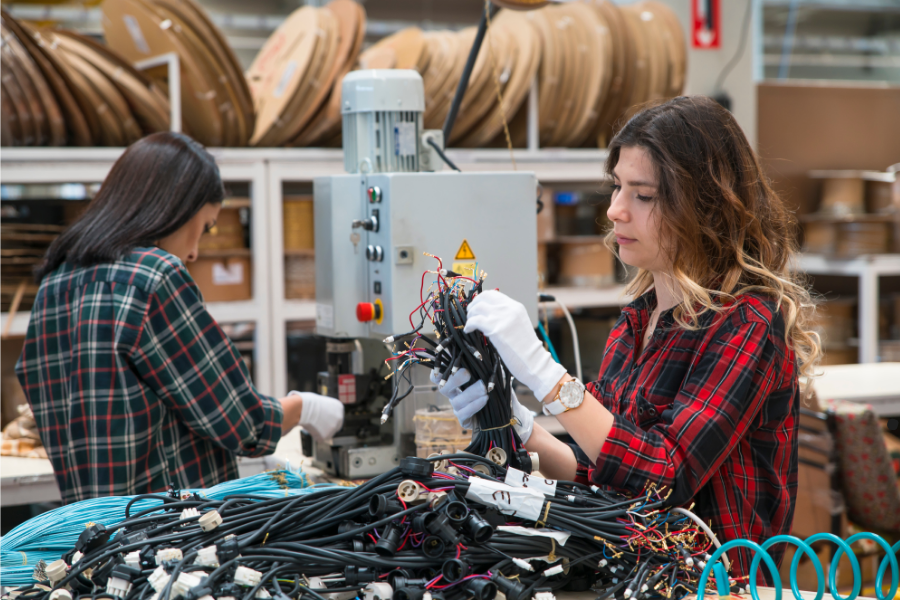
You cannot build an effective program without knowing where your employees stand. ESOL programs aim for proficiency in listening, speaking, reading, and writing, and workplace ESOL programs often use a competency-based approach. Competency-based approaches focus on job-specific language skills rather than generic types of English tests.
Follow this process across all shifts:
- Map critical roles and tasks: forklift drivers, machine operators, quality inspectors, team leads, maintenance technicians.
- List the language skills each task requires: reading safety data sheets, interpreting production orders and math-related figures on batch records, writing incident reports, following verbal directions during shift handoffs.
- Compare to current capabilities: use short, job-specific assessments during onboarding or annual training days to gauge each learner's level.
The Occupational Safety and Health Administration (OSHA) recommends that safety training be provided in a language employees understand. Recognizing this requirement is key for manufacturers to priortize compliance and the overall wellbeing of their workforce.
Group employees into cohorts-beginner, high-beginner, intermediate, advanced-while keeping teams from the same departments together so class content mirrors their day. Language Training Pro's English training for employees covers all levels and uses manufacturing-specific dialogue, forms, and safety documents gathered from the client site.
Design an ESOL Program Tailored to Manufacturing Operations
Vocational ESOL courses focus on manufacturing language skills, and manufacturing ESOL curricula must be practical and hands-on. Many workplace ESOL programs are tailored to specific job sectors, and effective workplace ESOL instruction includes technical vocabulary training. Here is how to create a program built for the floor, not a generic classroom:
- Prioritize safety-critical vocabulary in ESOL training: lockout/tagout procedures, Personal Protective Equipment (PPE) terms, Standard Operating Procedures (SOPs), and quality inspection checklists. Training should focus on common tasks, equipment, and safety protocols.
- Offer industry-specific tracks: English for production line operators, English for maintenance, English for warehouse and logistics, and English for supervisors managing bilingual teams. Many ESOL programs focus on language skills for specific job areas, and effective ESOL training includes job-specific language instruction.
- Integrate all four skills: reading work orders, writing maintenance tickets, speaking during huddles, and listening to shift-change directions. Manufacturing ESOL programs teach technical vocabulary and writing skills together. Effective programs require balancing language development and academic rigor so learners grow.
- Use role-play scenarios: reporting a near-miss, escalating a quality issue, asking for clarification on a work order-with scripts drawn from real plant incidents. Sheltered instruction strategies enhance engagement for multilingual learners. Pre-workplace ESOL classes also prepare learners for job applications and interviews, expanding opportunities for career growth.
- ESOL classes should be integrated directly with on-the-floor training, not isolated in a conference room. This keeps knowledge tied to real activities and materials.
Choose a partner like Language Training Pro that offers corporate English training customized for manufacturing-including vocabulary for machinery, production defects, and warehouse operations-rather than generic ESOL textbooks. Flexible formats matter: small-group classes on site, individual coaching for leads, and online ESOL training to meet the needs of remote or third-shift employees. Hybrid instructional models connect students with certified ESL teachers regardless of location or schedule.
Schedule ESOL Training Around Shifts Without Causing Downtime

Adaptive scheduling is critical for engaging workers in ESOL training in manufacturing. Flexible teaching models expand access to ESOL instruction without pulling staff off the line. Here are concrete scheduling approaches:
- 30–60 minute classes held right before or after shift changes (e.g., 2:15–3:00 pm for a 3:00 pm start). Rotate weekly cohorts so no line is short-staffed at the same time.
- Use slower seasonal periods (January–February for plants with holiday peaks) for intensive sessions.
- Leverage existing spaces: break rooms, training rooms, conference areas. Post laminated vocabulary cards near time clocks and vending areas for reinforcement.
- Micro-learning sessions can accommodate manufacturing shift schedules: embed 1–2 new terms or phrases into regular toolbox talks or safety huddles so supervisors provide language support without adding separate meetings.
- Phased rollouts: start with one department or one shift for 8–12 weeks, document results, adjust content, then expand to other areas and sites.
- Address pay policies: classify class time as paid training. Coordinate with payroll and unions to ensure smooth enrollment and avoid grievances.
Language Training Pro's language training programs are designed around shift changes and multi-site operations, with instructors available in the early morning, late evening, and on weekends.
Partner With a Provider That Manages Logistics and Reporting
Trying to build and run an ESOL program in-house often fails because the admin burden is underestimated. Effective ESOL programs require ongoing professional development for staff, and managing attendance, make-up sessions, and reporting across three shifts is a full-time job. A strong external partner should handle:
- Attendance tracking per session and per shift
- Make-up sessions for absences due to overtime or sick days
- Coordination with supervisors for release time and roster changes
- Progress dashboards: baseline scores, mid-course checks, final evaluations
- Regular reporting cycles (monthly or per module) so leadership can tie language gains to productivity, safety, and quality metrics
Peer-to-peer and job-specific demonstrations are effective methods for workplace training, and a good provider will incorporate them alongside structured lessons. Language Training Pro offers nationwide on-site and online delivery, instructor-prepared materials and resources, and a dedicated program manager who coordinates across plants. Their corporate language training services also include options for cross-cultural workshops and support for ESL employees when a plant has multiple language groups. Credentialed teachers and standardized curricula ensure instructional quality and consistency across locations.
Support Supervisors and Create a Plant Culture That Values Language Growth
Language instruction only sticks when the plant culture reinforces it. Utilizing experienced bilingual workers can enhance ESOL training effectiveness through informal mentoring on the floor.
- Train supervisors in clear communication strategies: give step-by-step directions, check for understanding, avoid idioms, and use visuals. This magnifies the impact of every lesson.
- Recognize progress publicly: highlight ESOL graduates in monthly safety meetings or company newsletters. This frames language mastery as ongoing professional development-not remediation. It builds commitment to improvement and helps employees thrive.
- Encourage bilingual peer mentors to support practice during huddles while respecting native languages in informal conversations.
- Create simple visual tools: bilingual labels in high-risk areas, QR codes linking to short pronunciation clips, vocabulary cards near machinery. Turn the plant into a learning campus where academic achievement in English language proficiency is visible and celebrated.
- Plan for sustainability: Language Training Pro can provide periodic refresher workshops and advanced modules-such as Business English training for supervisors or workplace English for manufacturers-to keep skills growing year over year.
Measure Impact and Continuously Improve the ESOL Program
The strength of any program lies in its data. Track these metrics before and after implementation:
- Safety incidents where miscommunication is cited
- Error rates during changeovers and preventive maintenance completion
- Scrap and rework on specific lines
- Employee retention in critical jobs and absenteeism rates
Combine quantitative data with qualitative feedback from supervisors and employees on confidence in meetings, radio communication, and documentation. Run at least annual reassessments of language skills-listening, speaking, reading, and writing-to document progress and identify employees ready for promotion or cross-training.
Adapt course content each cycle to reflect new machinery, updated SOPs, or customer requirements. This ensures the language instruction stays aligned with current plant priorities and continues to deliver measurable improvement.
Contact Language Training Pro for a tailored proposal that aligns with your production goals and quality requirements. Request a free quote online - no obligation, customized to your plant.
Frequently Asked Questions
How can a manufacturer implement an ESOL program without disrupting production?
Start with clear business goals and a needs assessment, then schedule short classes before or after shift changes, rotate cohorts so no line is short-staffed, and roll the program out in phases, starting with one department or shift before expanding.
What should a company do before launching an ESOL program?
Define what success looks like first. HR and operations should set measurable goals, like fewer safety incidents tied to miscommunication, better first-pass yield, or faster new-hire ramp-up, and involve supervisors early so training reflects real tasks on the floor.
How do you assess employees' English skills for workplace training?
Map critical roles and tasks, list the language skills each task requires, such as reading safety data sheets or writing incident reports, and compare those needs to employees' current abilities using short, job-specific assessments. Then group employees into cohorts by level and department.
What should a manufacturing ESOL curriculum include?
Focus on safety-critical vocabulary like lockout/tagout, PPE, and SOP terms. Strong programs offer job-specific tracks for operators, maintenance, warehouse staff, and supervisors, cover reading, writing, speaking, and listening, and use role-plays based on real situations, like reporting a near miss or escalating a quality issue.
When should ESOL classes be scheduled in a manufacturing plant?
Common options include 30–60 minute classes right before or after shift changes, intensive sessions during slower seasons, and short vocabulary lessons built into existing toolbox talks or safety huddles. Online classes can help reach third-shift or remote employees.
Should ESOL class time be paid?
Treating class time as paid training is recommended. It boosts participation and signals that the company values the program. Coordinate with payroll, and with your union if you have one, before enrollment begins.
How do you measure the success of a workplace ESOL program?
Track metrics before and after training, like safety incidents involving miscommunication, changeover errors, scrap and rework, retention, and absenteeism. Add supervisor and employee feedback, and reassess language skills at least once a year.


